Major Dunbar Howe and Sarah: Love, War, and the Tragic Loss

A worn, discolored tombstone sits in the family cemetery, Sunnyside, marking the burial site of Sarah Boyd Logan Shepherd Howe. Adorning the stone is a calla lily, symbolizing majestic beauty and marriage. Inscribed on her stone is the quote, “There will be rest in Heaven.” Indeed, life at that time was strenuous: taking care of 11 children, sewing, weaving, knitting, supervising the servants, and ensuring “useful tasks were being done after chores” for all the children and servants. Did she live in constant fear of the Indians since her great-great-grandfather, Colonel James Patton, was killed in the horrific Indian massacre at Draper’s Meadows? It would be reasonable to be anxious after losing three children and a grandchild; it might have been a burden too significant to bear on this earth.
In the end, she suffered considerably from dropsy either during or after giving birth to Agnes Shannon Howe (De Jarnette). This old term, dropsy, referred to the swelling of the soft tissue due to excess water accumulation and described her experience of swelling to the face, ankles, and, most likely, legs and hands. Little Agnes, named after George and Margaret Shannon’s daughter buried at Sunnyside, was described as tiny, most likely from premature birth. Agnes, however, lived a long life, although she, too, lost a young child, also named Agnes. Sarah now rests in peace with her daughter, sons, and granddaughter in heaven.
Although John Howe’s family’s stories in the family cemetery might end there, the worst was still to come when the world split apart in 1861, dividing the North and the South into a Civil War. John would have been in his sixties and too old to fight. The average soldier was between 18 and 30 years old. John’s sons, John Thomas, Samuel Shepherd, and eventually Haven Boyd Howe, all served as Confederate soldiers.
On the morning of April 15, 1861, President Lincoln issued action to invade the South. That day changed the Howe family’s life forever. The Northern aggression, considered fighting words in the South, prompted John Thomas Howe to enlist in the Fourth Virginia Volunteer Infantry Regiment in Blacksburg. The perception at that time was that the troops were embarking on a great adventure with grand experiences, but what was in store for them was an unforeseen tragedy.
Samuel Shepherd joined the Confederates in Martinsburg among the weary troops on September 25, 1862. He united with his brother, now Lt. John T. Howe, in the Fourth Virginia Volunteer Infantry Regiment. There’s no mention of him actually volunteering since he probably became drafted after turning 18 in August of that year. The new Confederate Congress passed the Conscription Act in April of 1862, stating that all able-bodied men from 18–35 should serve. Fredricksburg was Samuel’s first battle.
On the third day of the battle, July 3, 1863, the two Howe brothers participated in the tragic “Pickett’s Charge.” Now promoted to captain, John T. Howe led Company E of the Fourth Virginia Volunteers to charge courageously across an open stretch of 1,400 yards. Bravely dodging through musket fire, iron balls bound together fired from heavy cannons, and tinned iron cans containing lead balls that scattered when fired, the young lads followed the order.
Both were injured and captured. However, Samuel was taken to a field hospital and then sent to a Union prisoner camp, Point Lookout, in Maryland, where he tragically died. Captain John T. Howe was nursed back to health from his injuries and eventually released from military prison around 1864, enabling him to resume as a leader of his troops, but he returned home to tell his tales about the battle of Point Pleasant with his brother, Samuel.

Samuel Shepherd Howe
After serving in the Virginia Cavalry until the war's end, Haven Boyd Howe returned home to his family. He would tell tales of the Battles of Milford, Dinwiddie Court House, and Five Forks. The family spent endless hours in lively conversation, discussing what had transpired over the past four years. He eventually settled down with his new wife, Catherine McGavock Cloyd, and began, like others in the area, a thriving cattle business. The railroads caused dramatic growth for his enterprise, which enabled him to build an elaborate high-style Victorian home, now a museum called the Haven B. Howe House.
Major John Dunbar lived for another 26 years after burying his wife and 20 years after he buried his son Samuel, who was returned after dying in prison during “The War Between the States.” The heartbreak of burying his wife, a daughter, two sons, and a granddaughter came to an end when he was buried beside them all. The year was 1885 when he passed away, just five days after his 84th birthday. He lived an eventful life on his Sunnyside property overlooking Back Creek. He would say, “Wait for the wagon,” and his wagon came that day.
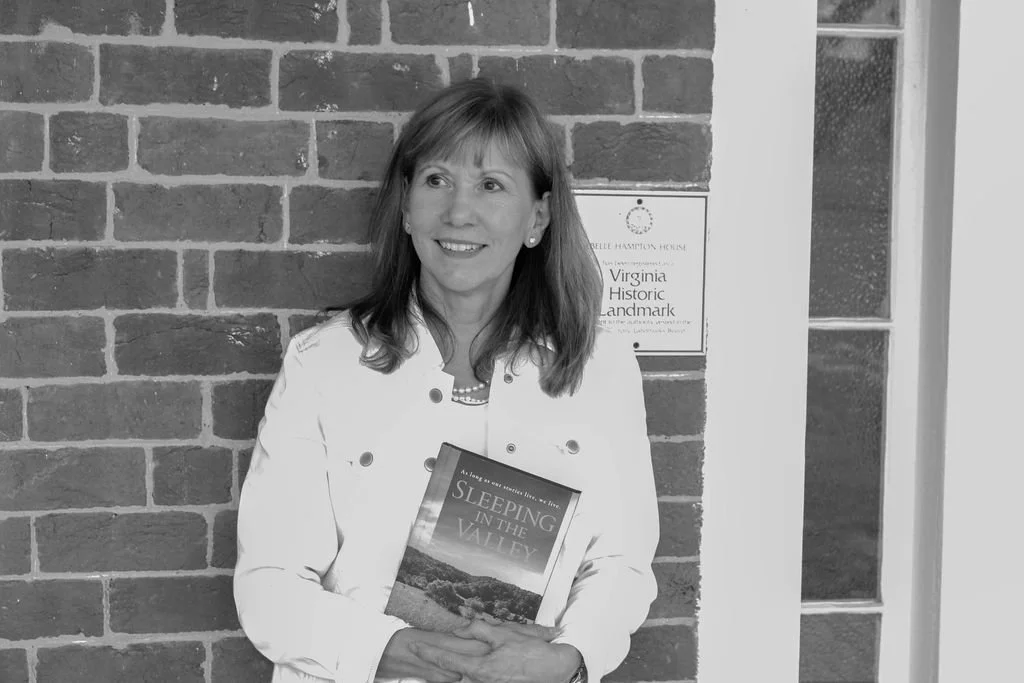
For more information about John and Sarah and others in Sunnyside, the Hoge/Howe cemetery, see the book Sleeping in the Valley.