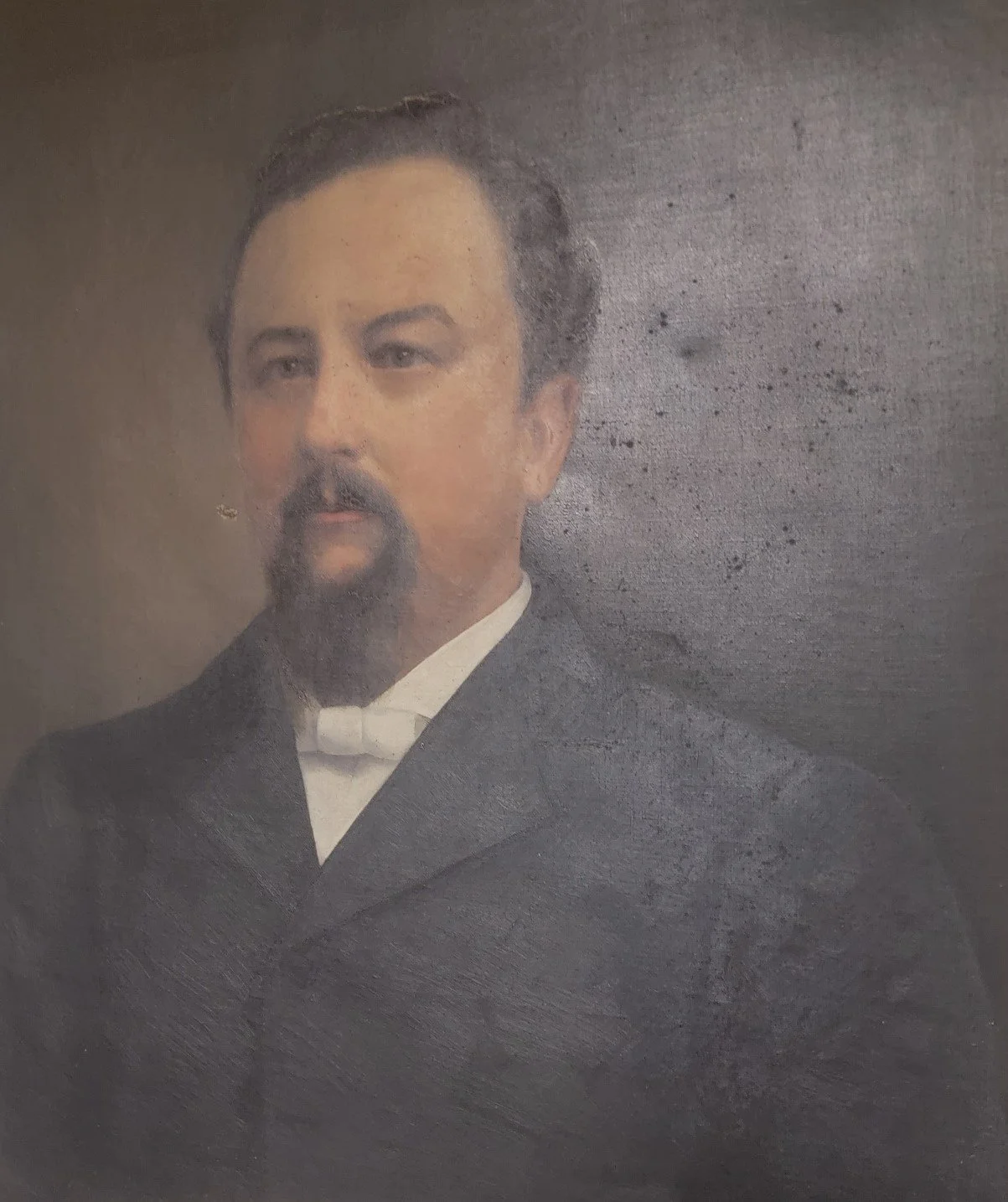
Dr. Joshua Vick
Introduction
Who is the legendary Lunsford Richardson? His name is etched in the annals of American pharmaceutical history, celebrated as the innovative mind behind Vicks VapoRub. His entrepreneurial spirit and dedication to creating accessible remedies for common ailments have made him a household name. Yet, his legacy is intertwined with another prominent family—the Hoge family. We will explore the life of Lunsford Richardson, his groundbreaking contributions to medicine, and the intriguing connection to the Hoge family.
Early Life of Lunsford Richardson
Born on December 29, 1854, in Johnston County, North Carolina, Lunsford Richardson's early life in a rural setting kindled his ingenuity and determination. He graduated from Davidson College in 1875, excelling in Greek and Latin, and initially embarked on a path in education. After four years, he realized that there was little money in teaching. He had $600, so he purchased a drugstore owned by his brother-in-law, Dr. Joshua Vick, and an associate for $450 in 1880. With the extra $150, he restocked the store. His transition to pharmacy would carve his name in history. Richardson's keen intellect and innovative spirit led him to master the intricacies of pharmaceuticals, setting the stage for his revolutionary contributions to healthcare.
Lunsford Richardson roomed at Dr. Joshua Vick's home in Selma on Massey Street and paid rent of $10 per month. Joshua and Lunsford became good friends. But after ten years in Selma, Lunsford Richardson felt that a larger area was needed, so he relocated to Greensboro, NC. He and partner John Fariss bought the Porter and Tate drugstore on Elm Street and renamed it the Richardson-Fariss Drugstore. One of his employees was William Sidney Porter, the writer later known as O. Henry.
The Creation of Vicks VapoRub

Vick’s Advertising Sign
In the late 19th century, Richardson took over a drugstore in Greensboro, North Carolina, and set out to develop innovative remedies. One of his most notable creations was the now-famous Vicks VapoRub, originally called Vicks Croup and Pneumonia Salve. He created it to help his young son, Henry Smith Richardson, who had severe croup. Happily, his son survived and lived well until his late 80s.
Family stories suggest that the name Vicks was chosen to honor his brother-in-law, Dr. Joshua Vick. By naming the salve after Dr. Joshua Vick, Richardson made a strategic decision contributing to the product's widespread appeal and enduring legacy. The product’s revolutionary blend of menthol, camphor, and eucalyptus oil provided unparalleled relief for respiratory issues, catapulting it to immediate success. Its demand skyrocketed during the Spanish flu pandemic of 1918, firmly establishing Richardson’s legacy in the annals of medical history. Tragically, Richardson himself fell victim to the very epidemic that brought his creation to prominence, passing away in 1919. (Vick’s Vapor Rub Timeline)
Pioneering Marketing Techniques
In 1898, Lunsford Richardson sold his share in a drugstore to establish the Lunsford Richardson Wholesale Drug Company in Greensboro. Frustrated with stockholders prioritizing dividends over reinvestment, he sold his share in 1905. He founded the Vick Family Remedies Company using his savings, marketing various remedies across twenty counties. He pioneered advertising, convincing the Postal Service to allow mass-mailing circulars addressed to “Boxholder,” earning him the title of “father of junk mail.”
Despite his initial efforts, the company faced financial challenges, prompting Richardson to enlist his son, Henry, who had inspired the creation of Vick's Vapor Rub many years earlier. In 1907, Henry took on the role of advertising and sales manager. To expand its market reach, the Vick Chemical Company employed innovative strategies such as road signs, store displays, and Rural Free Delivery. Lunsford Richardson’s approach to direct marketing through mail campaigns set a precedent for modern advertising practices. Together with his son, they revolutionized the field of advertising.
Richardson's Legacy
Lunsford Richardson passed away in 1919, but his remarkable legacy lived on through his family and the enduring Vicks brand. This brand, which became a cornerstone of Procter & Gamble's healthcare division, continued to thrive and expand, bringing relief to countless individuals worldwide. Richardson’s contributions to making healthcare accessible and affordable remain pivotal in developing over-the-counter medications, setting a standard that would influence the industry for generations.
The Hoge Family Connection

Annie Hoge’s wedding announcement
The connection between Lunsford Richardson and the Hoge family is through Annie Hoge, who married Dr. George Davis Vick, the son of Dr. Joshua Vick—the namesake of Vicks VapoRub. This marital alliance intertwined the Hoge family with the Richardson and Vick legacies, blending two influential American families.
Annie was the oldest child of Dr. Beverly Lacy Hoge. Although she lived in Roanoke, VA, where her father was a prominent lawyer, they moved to Selma, North Carolina, when he became a Baptist preacher. B. Lacey Hoge came to the church as pastor in 1898 during a severe economic depression. Annie went from riches to rags overnight. According to Annie, she now lived on the “other side of the tracks.”
Annie left Selma when her father became a minister at The First Baptist Church in Charleston, South Carolina. She later attended Cox College, a private women's college located in College Park, Georgia, just outside of Atlanta. During her time in Selma, she never met Dr. George Vick, who was eleven years her senior. However, one day after her graduation, she returned to visit some friends and met George at a social gathering. He was immediately smitten with her and invited her to accompany him on patient visits. Their romance blossomed, even though she was initially engaged to someone else. Dr. Vick traveled to Charleston every weekend to see Annie until they got married in 1909.
Shared Values and Ventures
Both families, deeply rooted in their values of innovation, entrepreneurship, and philanthropy, crafted a unique bond that enriched their legacy and left an indelible mark on their respective fields. The Richardson-Hoge connection exemplifies the profound influence that familial alliances can have in shaping both industries and communities, revealing how shared ideals can unite and inspire.
Robert H. Hoge, Annie’s younger brother, emerged as a remarkable figure in his own right. A painter, sculptor, engineer, scientist, inventor, and writer, he was later celebrated as the quintessential “Renaissance man.” His wide-ranging pursuits not only showcased his diverse talents but also reinforced the legacy borne from the family's entrenched values of creativity and intellectual curiosity. Robert's artistry and inventions inspired many, and he became a symbol of interdisciplinary excellence.
Annie, too, carved out a significant legacy in the town of Selma. Known for her unwavering dedication and altruistic efforts, she embodied her father's philanthropic spirit. Serving as the esteemed hostess at the First Baptist Church of Greensboro for over thirty years, her warmth and hospitality reached countless individuals in the community. Her role extended beyond the church; as a devoted member of the Johnston County Salvation Army Board, she actively contributed to initiatives that uplifted the less fortunate.
After experiencing the profound loss of her husband, Annie took her compassion a step further by establishing the Dr. George D. Vick, Sr. Award, which honors outstanding graduates from the local high school. This initiative not only celebrated academic achievement but also inspired future generations to strive for excellence and give back to their community. Over the years, her philanthropic endeavors have woven a rich tapestry of support that has significantly impacted Selma and Johnston County, cementing her legacy as a pillar of kindness and community service.
The Richardsons and Hoges have both demonstrated a commitment to philanthropy, focusing on education, healthcare, and community development. Lunsford Richardson’s own values of service and accessibility resonate in the charitable work pursued by the extended family network.
Conclusion
Lunsford Richardson’s groundbreaking work in the pharmaceutical industry and his creation of Vicks VapoRub have left an indelible mark on history. The connection to the Hoge family adds a fascinating dimension to his story, illustrating the power of familial and entrepreneurial synergy. Together, these families exemplify how dedication and innovation can create lasting legacies that benefit future generations.
FAQs
1. What was Lunsford Richardson best known for?
Lunsford Richardson is best known for inventing Vicks VapoRub, a menthol-based ointment that provides relief for respiratory ailments.
2. How did Lunsford Richardson start his career?
Richardson began his career as a teacher before transitioning into pharmacy, where he developed a series of medicinal remedies.
3. What is the connection between Lunsford Richardson and the Hoge family?
The connection lies in the marriage of Annie Hoge to Dr. George Davis Vick, linking the Hoge family to the Richardson and Vick legacies.
4. What values did the Richardson and Hoge families share?
Both families emphasized innovation, entrepreneurship, and philanthropy, which defined their contributions to society.
5. What is the legacy of Lunsford Richardson today?
Richardson’s legacy endures through the Vicks brand and the philanthropic work inspired by his values of accessibility and service.