
The Ghost of Sunnyside: The Haunted Civil War Journey of Samuel Shepherd Howe
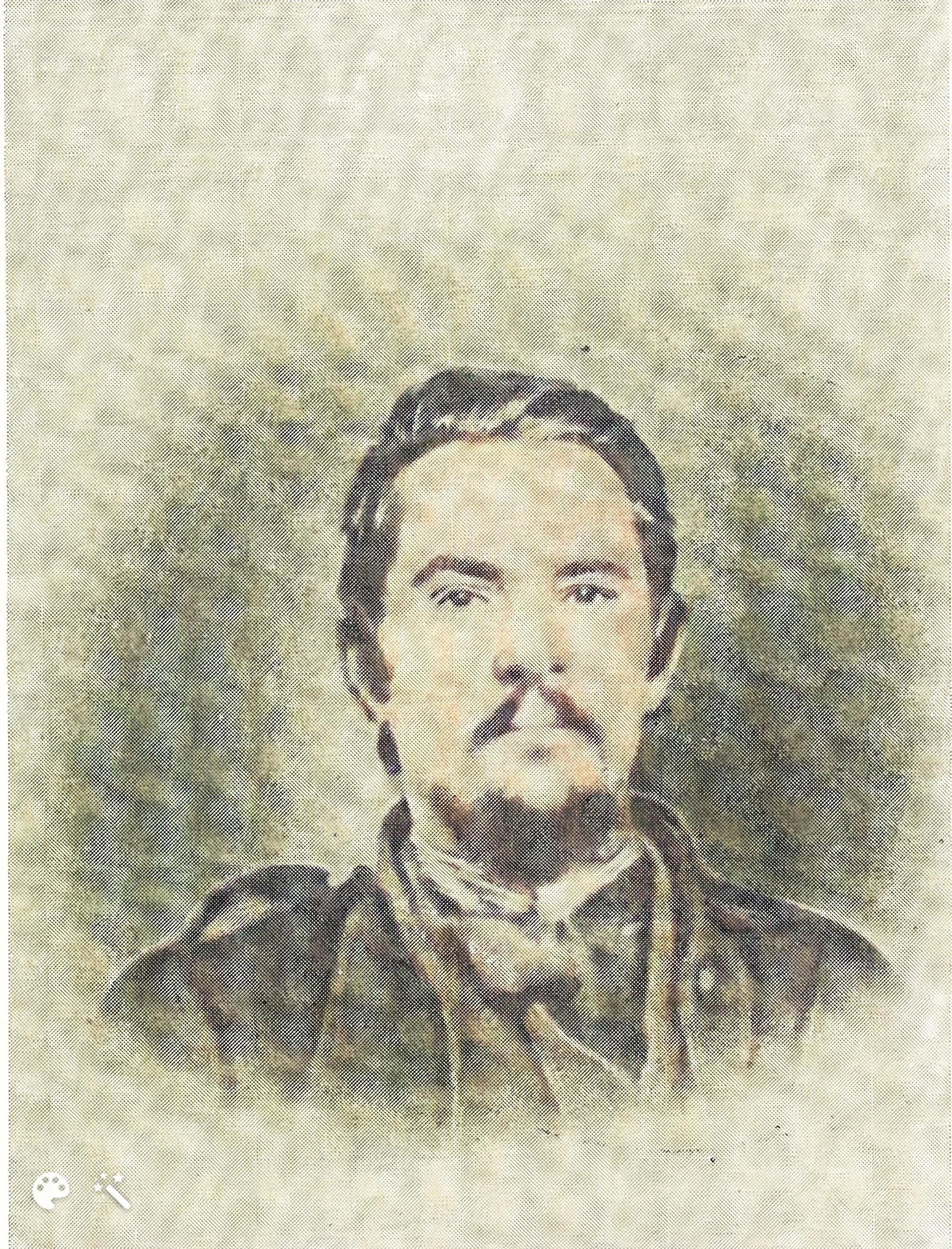
Samuel Shepherd Howe
“He walks still,” say the locals. “Out in the fog where the creek bends. You’ll see him, if the night is quiet and the wind carries the screams…”
A Whisper from the Past
Long ago, in the mist-veiled hills of Pulaski County, Virginia, a boy named Samuel Shepherd Howe was born—the seventh son among eleven children. His father, Major John Dunbar Howe, had come to own the family homestead, Sunnyside, through a quiet trade cloaked in grief—land for land, brother to brother, after their father passed on. A simple exchange, they said. But such trades are never truly simple... not when the dead are involved.
Sunnyside was a place of soft hills and cooler breezes, its orchards heavy with sweet Albemarle pippins, and the laughter of barefoot children echoing through the pastures. But the land had secrets. And young Samuel, for all his joy in the meadows and his studies by the firelight, could not yet hear the whispers buried deep in the soil.
He should have listened. Because soon, the world would split in two—and ghosts would rise.
The Day the Shadows Came
It was April 16, 1861. A date scorched into memory.
President Abraham Lincoln had issued the call to arms—an invasion of the Southern states. In one breath, the world at Sunnyside changed. The Howe family, like so many others, watched the skies darken. For the South, Lincoln’s declaration wasn’t a command—it was a curse. And so, the eldest brother, John Thomas Howe, enlisted. With the 4th Infantry, Virginia Volunteers, he marched away, a lantern flickering in the fog of war.
They said it would be an adventure. But what came for them… was death.
A War Waged with Shadows
John missed the Battle of Bull Run—an omen, some said, spared by fever from an early grave. But there was no escape from Antietam, a bloodbath where the river itself ran red. General Lee’s forces faced annihilation, and after retreating through the hills of Maryland, the South’s dream flickered like a candle in the wind.
Three days after the battle, on September 25, 1862, Samuel Howe joined his brother at Martinsburg. Whether by choice or by conscription, the boy had stepped into a realm from which few returned unchanged.
His first test was Fredericksburg—a storm of rain, fog, and steel. The Union soldiers, glistening like a sea serpent of blue and bayonets, marched to their doom. The Southern troops, hidden behind a cold stone wall, stood like shadows, waiting. When the smoke cleared, the ground was slick with blood, and the silence that followed was deafening. Samuel had survived. For now.
But victory has a price… and the dead don’t always rest.
Cold Silence and the Wilderness
The winter that followed was brutal. Hunger gnawed like rats beneath the skin. Disease crept through the camps. Men coughed and wasted away, wrapped in ragged blankets, muttering prayers to an absent God.
Then came Chancellorsville, a twisted forest of thorns and tangled fate. Union General Hooker boasted of victory, but pride is a dangerous companion. Lee, with Stonewall Jackson by his side, struck with eerie precision. It was said the very trees shivered as Confederate troops moved like phantoms through the underbrush.
Victory was theirs… but at a terrible cost. Amid the chaos and gunfire, Stonewall Jackson was struck by friendly fire. They tried to save him, slicing off his arm to stop the rot, but the fever took him. And from that moment on, the spirit of the army felt changed—darker, haunted.
“Charge, boys... and remember Jackson!” they cried. But even the bravest cry trembles when death walks beside you.
Gettysburg: Where the Screams Never Fade
And then… Gettysburg.
The great and terrible clash that even now echoes through time. As they crossed into Pennsylvania, spirits were high. But those who marched were not alone. Shadows gathered, and fate waited.
It began not with cannon fire—but with footsteps. Confederate soldiers stumbled into Union cavalry while hunting for shoes. What followed was chaos: boulders, smoke, heat, and screams. At Devil’s Den, the land itself seemed cursed. Among the fallen was Andrew Johnson Hoge—kin to the Howes—slain in that rocky hellscape.
Then came July 3, 1863. The day of Pickett’s Charge.
Across 1,400 yards of open death, Captain John T. Howe led Company E, the 4th Virginia Volunteers. The brothers marched through musket fire, iron canister shot, and roaring flames. A wall of stone became their only shield—until it too shattered under cannon fire. John was thrown into darkness. When he woke, he saw Samuel, broken and bleeding, crumpled beside the torn earth.
Neither would leave on their own feet. And their fate was sealed by the silence of the enemy.
A Prison of Bone and Fog
Samuel was taken to Point Lookout—a name that sounds peaceful but is steeped in dread. What was supposed to be a prison became something more—a graveyard for the living.
Tents flapped like pale ghosts on the storm-beaten coast. The sea howled, but the men inside howled louder. Over 3,000 prisoners would die there—of starvation, of disease, of sorrow. Some whispered that the place was cursed. That the dead cried out from the marshes. That no prayer ever reached heaven from that stretch of haunted earth.
Samuel didn’t last long. Weakened by fever, hunger, and heartbreak, he passed on August 14, 1864. There were no songs. No flags. Just another soul slipping into the fog.
They brought him home—eventually. His body was returned to Sunnyside and buried in the family graveyard on March 2, 1866.
The stone says:
“He was brought home and buried in the family Graveyard... To his memory, the marble slab has been erected by his aged and sorrowing father.”
But stone can’t hold a spirit.
And many say… Samuel never really came home.
Echoes at Sunnyside
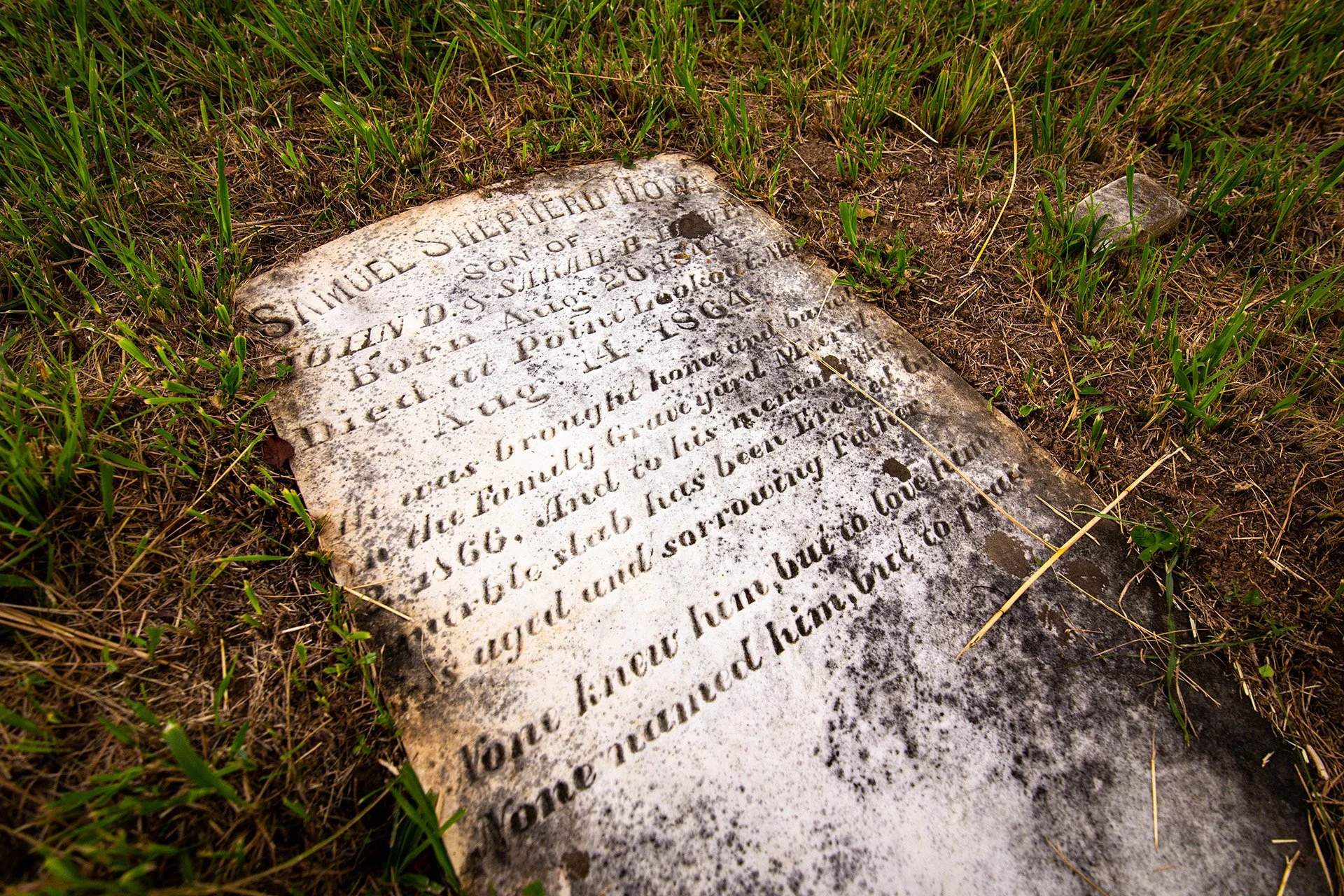
Samuel Shepherd Howe Gravestone at Sunnyside Cemetery
To this day, locals swear they’ve seen him.
A lone figure in a tattered gray uniform, standing by the orchard where the apples no longer grow sweet. His face is pale, eyes lost, staring always toward the horizon—as if waiting for his brother to return, or for a battle that will never end.
On foggy nights, they say you can hear boots crunching the frost-bitten grass. A whisper of a charge. A faint echo of cannon fire in the distance. And if you're quiet… if you listen close by the creek… you might hear Samuel calling.
What Remains?
Samuel Shepherd Howe’s tale is etched in marble—but it lives in shadows. His story, like so many others of that war, didn't end with death. It lingers—in the land, in the trees, in the memories whispered between generations.
He was a boy of Sunnyside. A soldier of Virginia. And perhaps… a ghost still searching for peace.
FAQs – The Spirits of Sunnyside
Q: Was Samuel Howe a real person?
Yes. Samuel Shepherd Howe was a Confederate soldier who died in 1864 at Point Lookout Prison Camp. His life and death are recorded in Virginia history.
Q: Is Point Lookout really haunted?
Many believe so. It’s considered one of the most haunted Civil War sites, with numerous reports of paranormal activity, ghost sightings, and strange noises.
Q: Does Sunnyside still exist?
The property is known to local historians, though access is limited. Its legends remain strong among Civil War enthusiasts and lovers of ghost stories alike.
Q: Are there other ghosts associated with Gettysburg?
Absolutely. Gettysburg is one of America’s most haunted battlefields. Visitors report sightings of soldiers, sounds of battle, and eerie phenomena.
Q: How can I find out more about the Sunnyside Cemetery?
The book Sleeping in the Valley is available at BelleHampton.com. It chronicles the heroic tales of those who are buried in the cemetery, including three American Revolutionary Soldiers.
The Last Word
Some stories stay buried. Others... claw their way out of the ground.
Samuel Howe’s life is a tale of youth lost, of battles fought in vain, and of spirits unable to rest. Whether you believe in ghosts or not, one thing is certain—his presence is still felt. And as long as the fog rolls through Sunnyside, he will be watching.
So next time you're walking a lonely path, and the wind rustles the trees just right... listen closely.
He might be there.