More Than a Physician: Dr. William Hoge’s Life of Faith and Service
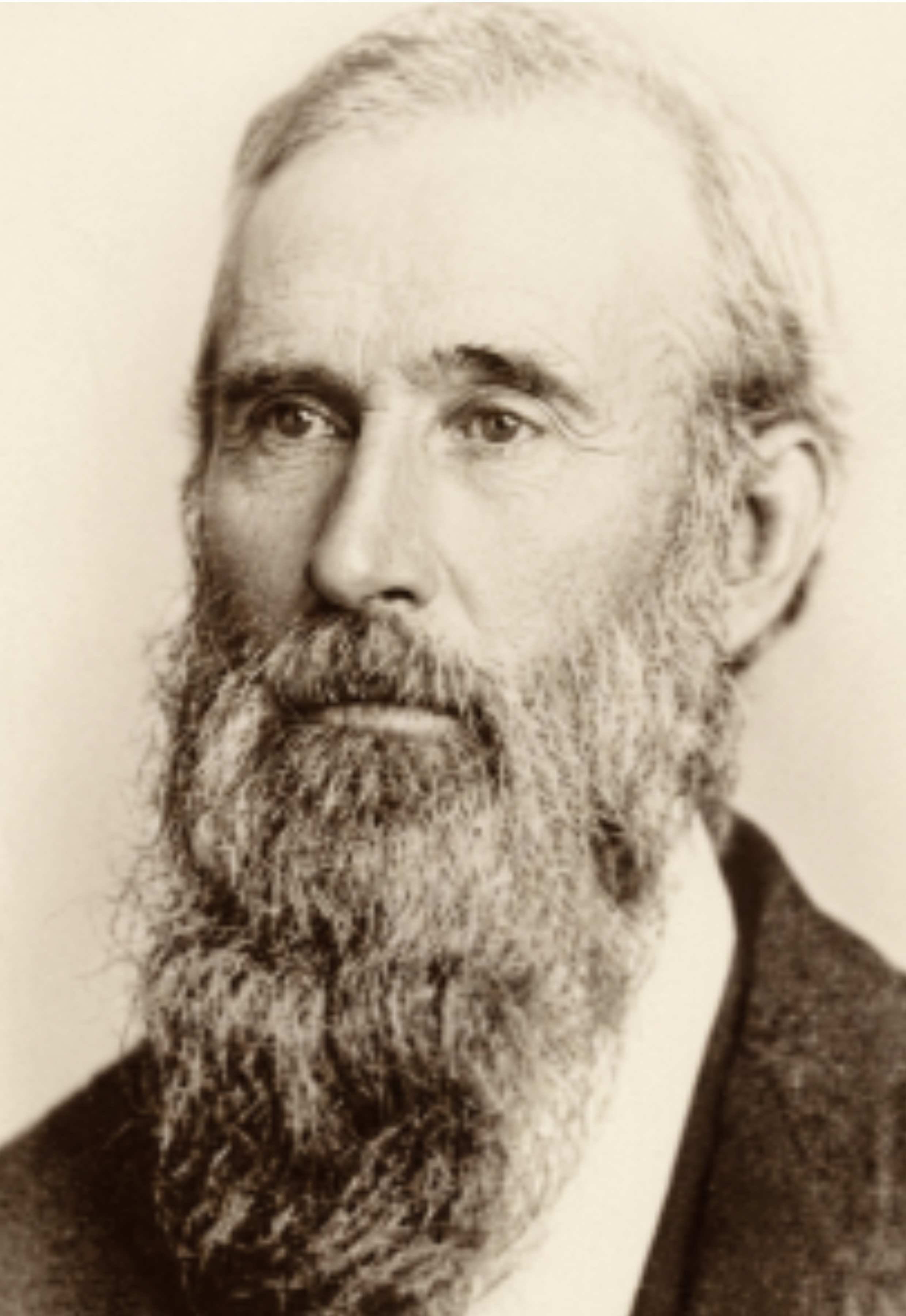
Dr. William Edward Hoge
In the long history of Belle Hampton, Dr. William Edward Hoge stands at a revealing intersection of family inheritance and public service. He was born on May 26, 1822, at the old Hoge homeplace later known as Belle Hampton, into a household already marked by accomplishments in military standing, landholding, and deep New River Valley roots. His father, General James Hoge, and his mother, Eleanor Haven Howe, tied him to two of the region’s foundational family lines. Yet William’s distinction was not simply that he inherited place. It was that he translated inherited standing into everyday service.
The records show a man who moved outward from the family estate into professional life without abandoning the obligations of kin or community. He married Jane L. Meek on August 20, 1844. Together they built a household remembered as intellectually serious: local history says they were “great readers,” owned a fine library, and were both well-versed in Latin. Their children were remembered as Eleanor, who died young, James Meek, Robert Sayers, William Howe, and Olivia “Ollie” Hoge.
His professional life comes into focus around 1855, when he had already begun practicing medicine in Newbern, Virginia, and later moved to Point Pleasant, also called the Slide community, in Bland County. That relocation matters. It placed him in a mountainous, thinly settled environment where medical authority depended not on a hospital title or university chair, but on whether neighbors trusted you to come when called, often over difficult roads, and to do practical good once you arrived. Accessible sources do not show hospital appointments, medical-society leadership, or published medical writing for Hoge. Instead, they point to the older model of the country doctor: part physician, part surgeon, part counselor, and part landholding gentleman.
That interpretation is reinforced by writers who remembered his medical skill. A local history credits him with handling diphtheria especially well and even attributes to him an unusually early appendectomy on Spur Branch, carefully marked there as coming from family records rather than from a medical journal. That same source emphasizes his learning, his careful dress, and the respect he commanded. The picture is of a physician whose reputation rested on results, bearing, and steadiness more than on formal public honors.
Hoge’s influence also extended well beyond medicine. He donated land in 1882 for the Slide School, a practical act that tells us much about his view of rural improvement. In church life, he was central as well. He helped organize the Bland Presbyterian Church at Point Pleasant in 1874, served as a ruling elder, and was long remembered as the likely donor of the church land, later formally deeded by his widow and son in 1892. In civic-fraternal life, he was a charter member of the Freemasons Bland Lodge No. 206 and served as its first Worshipful Master in 1867. Local history also identifies him as a Democrat. None of that is incidental. It shows that his authority in Bland County was woven through the institutions that anchored rural life: school, church, lodge, family, and farm.
His material life followed the same pattern. He lived in Point Pleasant, but he also owned farmland in Bland, Burke’s Garden, Abbs Valley, and Belspring. That spread of property suggests both economic range and a practice that likely followed the contours of his social world. Indeed, the evidence points to a physician whose rounds moved through networks of kinship, tenancy, church connection, and neighborhood obligation. Belle Hampton may have been his origin point, but Point Pleasant was where he enacted his public identity.
On military service, the record is narrower but still significant. Local history states that he was called to the Battle of Cloyd’s Mountain as a surgeon in the Confederate Army. The horrors of what he saw and the surgeries he was required to perform changed his life. He no longer charged his patients money, caring for each one for free. It fits the profile of a community physician drawn into wartime emergency close to home rather than a long-term line officer giving his service to the community.
One of the most striking episodes in his life came after the war. In 1878, when yellow fever devastated Memphis, he took responsibility for his wife’s orphaned niece and nephew, Sophia and Eugene Edmondson, traveled to Tennessee, and smuggled them out through the quarantine block under his care. Whether later retellings polished the drama or not, the underlying act is clear: the physician was also the family’s rescuer. That pattern appears again in the children and younger kin raised in his household, and in the memory that James Hoge Tyler, later governor of Virginia, spent much of his boyhood in his uncle’s home while he was young.
When Hoge died on February 3, 1885, his obituary in Central Presbyterian opened bluntly: “Died suddenly, of paralysis, near his home in Bland county, Va., February 3d, 1885.” The same notice remembered the relief his work had brought the people around Point Pleasant. That combination, sudden death, a country neighborhood, and gratitude for practical service, captures the shape of his legacy. Archival description of the family papers says his estate left land in Burke’s Garden, Pulaski, and Bland County to his three sons, while daughter Olivia “Ollie” received land in Abbs Valley near present-day Pocahontas, Virginia. It was said that she received the least productive farmland because she was being punished for marrying a republican, Jim Browning. However, the land might not have been good for farming, but it had a coal vein, which made her the wealthiest of her siblings.
Dr. William E. Hoge is buried at the family cemetery, Sunnyside in Pulaski County, VA. His obelisk gravestone sits prominently under a shade tree. His wife, Jane, was the last one buried in the cemetery after she passed in 1894.