
Honoring the Cherokee Past at Belle Hampton
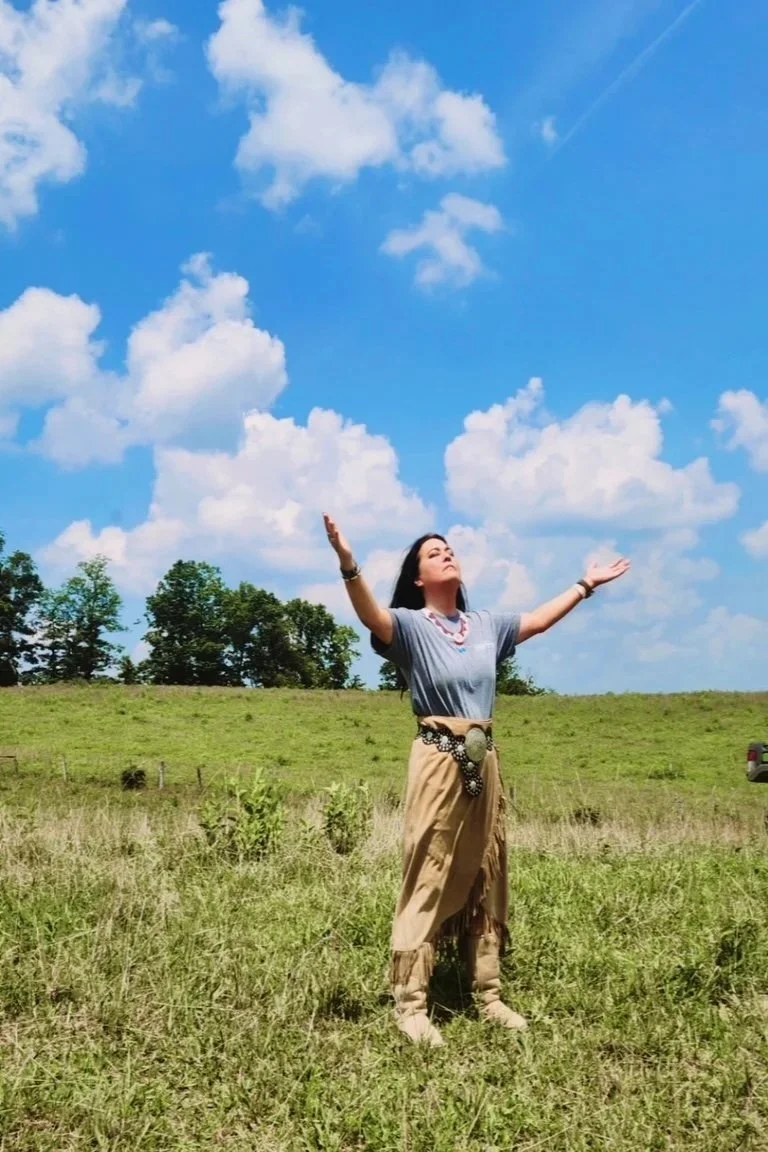
Chief Ren performing Cherokee Burial Ritual
In the 1700’s, before Hayfield (later called Belle Hampton) was established by James Mayo Hoge, Cherokee people roamed the land, establishing a village for hunting on the step-up field where Back Creek and Shuffle Branch Creek merge. A now 300-year-old tree points the direction toward the village, a common way to mark trails. In the 1760s, Cherokee people migrated south into Georgia, Tennessee, Alabama, and North Carolina. However, the Cherokee War, which occurred in southwestern Virginia, eastern Tennessee, western North Carolina, western South Carolina, and northern Georgia, took place in 1776, during the Revolutionary War.
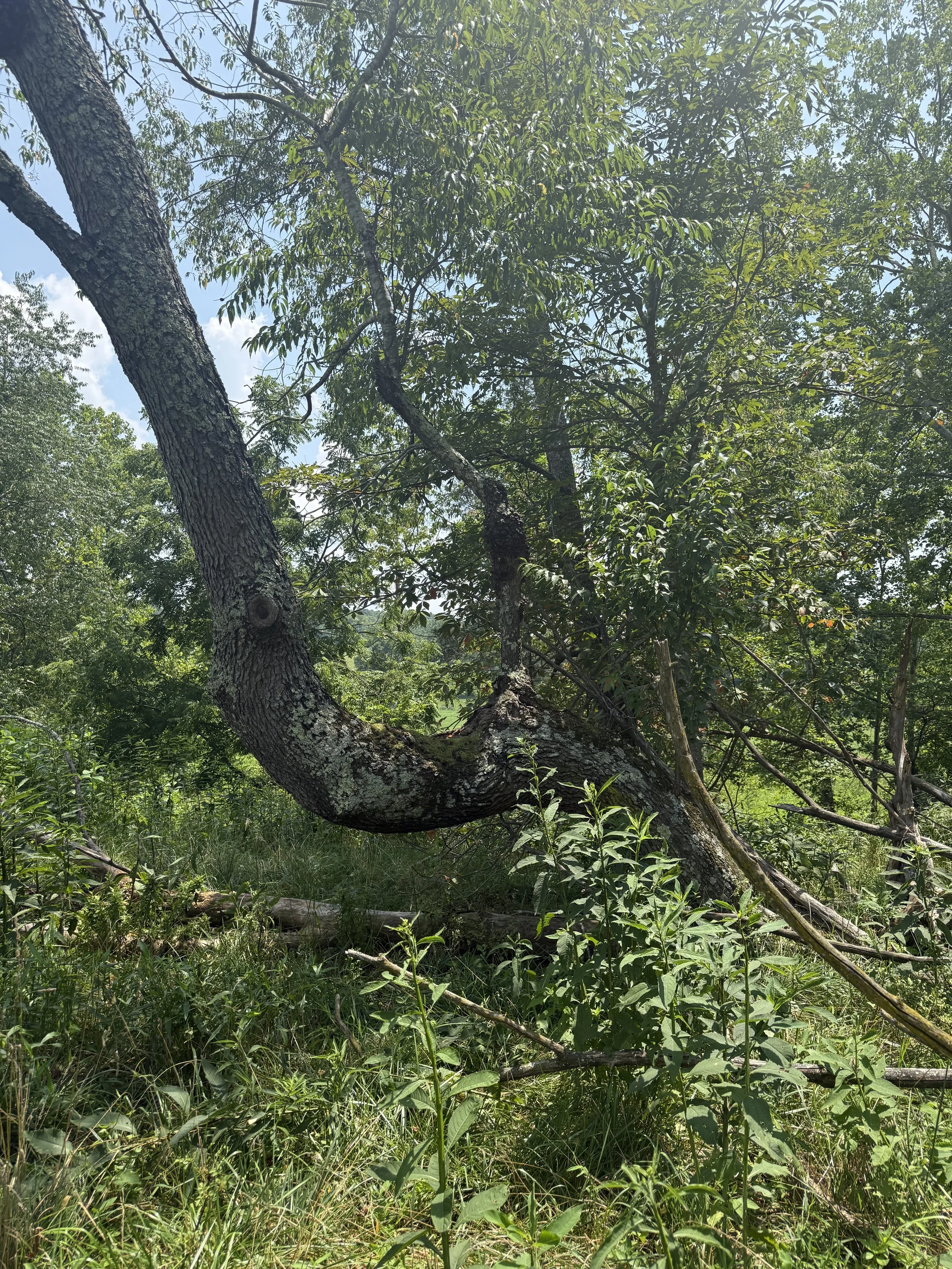
Trail marker tree, 300 + years old
Nancy Ward, a Cherokee “Beloved Woman,” was trying to make peace with the patriots; unfortunately, the tribe was divided between attacking and remaining peaceful. The result was a Cherokee attack, which came with vengeance from the patriots, destroying the Cherokee villages. Although the hunting village was long gone before James Hoge established the homestead, the recent history of the war and the Draper Massacre was top of mind for the young future General Jame Hoge.
General Hoge later reflected on growing up at Hayfield during a time when his family feared Native American attacks. His grandson, Governor Tyler, shared the stories from Hoge’s childhood. In one account from the late 1700s, young Hoge described a wounded Cherokee man who had been shot by an unknown pioneer while walking down Back Creek, presumably toward the Cherokee burial ground at what is now Belle Hampton. The man collapsed and died where the two creeks meet. Governor Tyler viewed the incident as troubling because it reflected how closely General Hoge’s childhood was shaped by wartime violence, massacres, and perceived threats from Native Americans.
But the Cherokee warrior who died on our property never received a proper burial. Did the Hoge family bury him on the property? Not likely, but there is no documentation on what happened to his body. Did a companion bury it? Or was it left to the elements?
Approximately 250 years later, we were fortunate to meet a Cherokee Chief. She graciously offered to perform a proper burial to put him to rest. She showed us what most likely was the burial mound where she performed the burial ritual, blessing the property. It was a moving experience and a much-valued education on the Cherokee rituals.
After the burial ceremony, we toured the property where a tribal archaeologist identified Cherokee plates in the creek. She educated us on what to look for in the stones and how they used them. We offered her the chance to return to walk the creek more extensively. She showed us medicinal trees, as well as the various natural plant medicines doctors use to treat ailments.
When I went back to my historical account of the events, as recounted by Gov. James Hoge Tyler, I realized my story wasn’t accurate to what I had shared with her, which inspired me to write the corrected version of the story. The governor noted the documented findings of arrowheads and other archaeological remnants. Although I am unclear about what happened to those relics, we shared our findings of scraping tools and arrowheads.
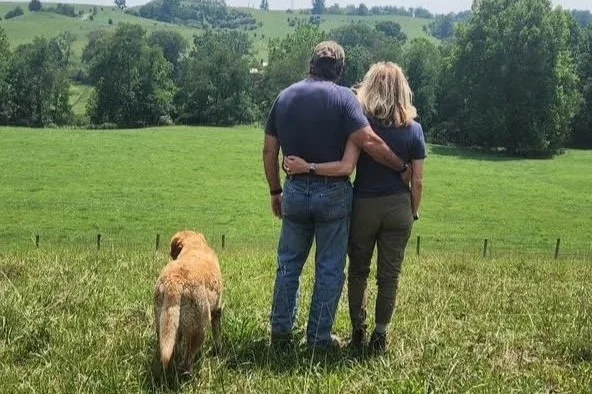
Tom, Madeline and Branch (dog) looking over their property
Ultimately, this history reminds us that Belle Hampton holds more than family memories; it carries traces of the Cherokee people who lived, hunted, traveled, and suffered here long before the Hoge family made it their home. While many details remain uncertain, the burial ceremony, the archaeological findings, and Governor Tyler’s account have deepened our understanding of the land and our responsibility to tell its story with care. By correcting the record and honoring those who came before us, we can preserve a fuller and more respectful history of Hayfield (Belle Hampton) for future generations.
